
Search Lauderdale County Criminal Records
Lauderdale County criminal records are centered in Ripley, where the courthouse and sheriff office keep the county trail in one place. That makes the search manageable, but it still helps to know which office owns the record you want. The circuit clerk keeps the court file. The sheriff keeps the arrest side. If you know the year, the name, or the case type, you can keep the request focused and avoid a broad search. This page keeps Lauderdale County criminal records tied to those county offices and the Tennessee tools that help when the file is old or hard to match.
Lauderdale County Quick Facts
Lauderdale County Criminal Records Overview
The Lauderdale County Circuit Court Clerk is at Lauderdale County Courthouse, 100 Court Square in Ripley, and is open Monday through Friday from 8:30 AM to 4:30 PM Central time. The phone number is (731) 635-0101, and the fax is (731) 635-9509. The sheriff office is at 250 Commerce Street and can be reached at (731) 635-4601. That gives Lauderdale County criminal records a direct county path. The clerk handles Circuit and General Sessions court records. The sheriff handles the arrest side and active warrants. If you know which part of the case you need, the county offices can usually point you in the right direction right away.
Because the research set does not list a city police office for Lauderdale County, the county trail does most of the work. That makes the courthouse and sheriff especially important. A clean request with a name and year is often enough to get the search started the right way. Certified copies are also available on request, so it helps to ask about that early.
Lead-in: The Tennessee court-clerks image comes from tncourts.gov/courts/court-clerks.
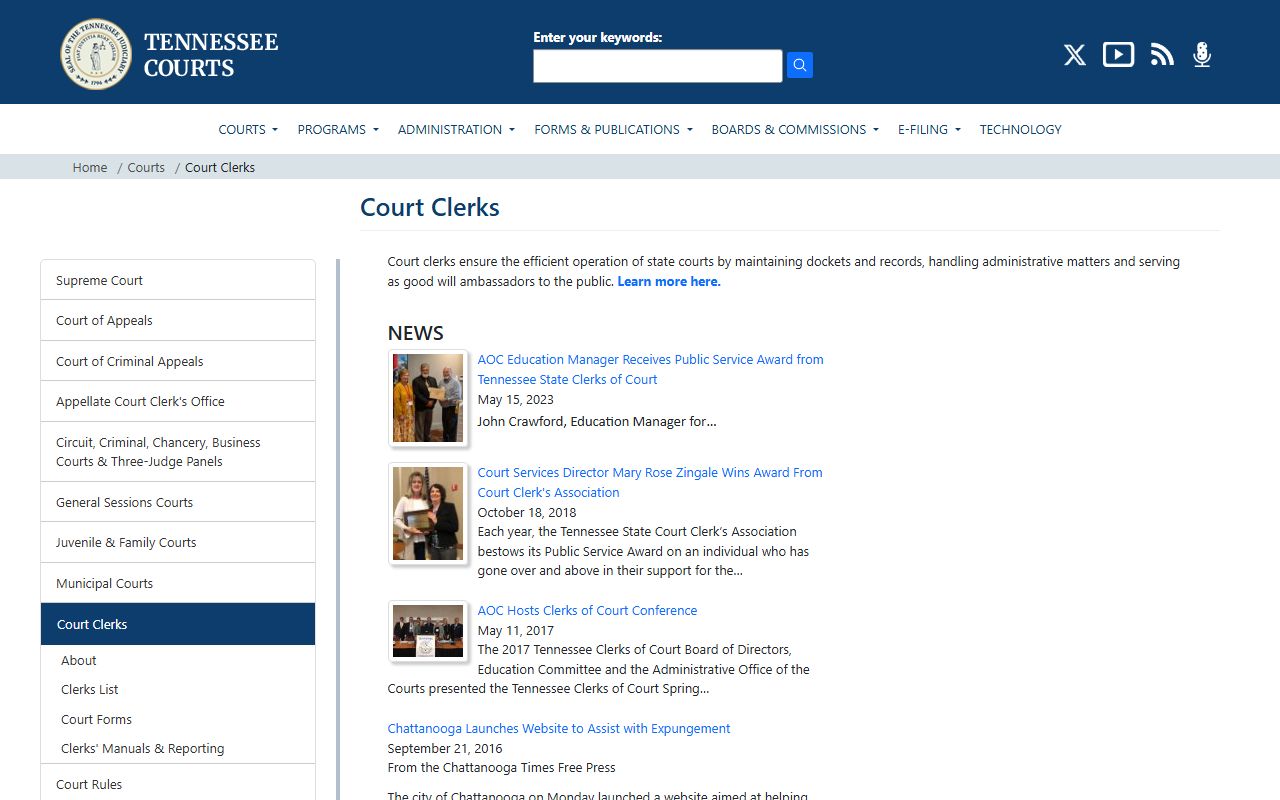
This image gives Lauderdale County searchers a direct statewide office guide while the county side handles the local file.
Where to Find Lauderdale County Criminal Records
Lauderdale County criminal records are usually found through the circuit clerk or the sheriff. If you need the judgment or docket, the clerk is the first stop. If you need the arrest lead or custody side, the sheriff is the first stop. That simple split matters because a request can slow down when it does not say which office created the record first. The clerk also keeps the case trail for Circuit and General Sessions matters.
A better request gives the year, the name, and the record type. If you have a case number, that is even better. Lauderdale County criminal records are easier to find when the office can tell whether the file is court side or arrest side. A focused request can often get the answer on the first pass. The sheriff office is also the right place to ask about active warrant questions.
The Tennessee clerk directory at tncourts.gov/courts/court-clerks can help if you want to confirm the right office before you call Ripley.
Note: In a county search, the office that made the record is usually the best office to ask first.
How to Search Lauderdale County Criminal Records
The best search key is still the case number. If you do not have one, use the full name and approximate year. Lauderdale County criminal records are easiest to trace when the office can tell whether the file is court side or arrest side. Because the county is small, the request can stay very focused and still produce a good result.
For a statewide cross-check, the Tennessee Courts portal at tncourts.gov can confirm whether the case appears in the state court system. If the case went to appeal, the Public Case History database at tncourts.gov/courts/supreme-court/public-case-history can show the appellate step. Those tools are helpful when the local file is older or when the county office needs a tighter request before copying.
- Use the full name and year when you can.
- Ask whether you need court or arrest records.
- Keep the request tied to Ripley and Lauderdale County.
- Bring any report or docket number you already have.
Lauderdale County Criminal Records and Local Offices
Lauderdale County works best when the request matches the record holder. The clerk has the court file. The sheriff has the arrest side. If the file is older, the office may need a year range or an older docket style. That is normal. Lauderdale County criminal records often require a little patience, but the local offices can still point you in the right direction if you keep the search narrow. The clerk fax at (731) 635-9509 is helpful when you want to send a precise written request.
Open-records law still shapes the search. Under T.C.A. § 10-7-503, many records are open during business hours. Under T.C.A. § 10-7-504, some material stays confidential or partly closed. That means a county office may give you the public part of the file while withholding protected material. That is a normal records rule, not a dead end.
Need the statewide name-search route? The TBI page at tn.gov/tbi/divisions/cjisdivision/background-checks.html is the next useful stop.
Tennessee Search Tools for Lauderdale County
State tools matter when a Lauderdale County record is old. The TBI fee rule in T.C.A. § 38-6-120 explains the public cost for a name-based criminal-history search. The Tennessee State Library and Archives guide can help if the record is in archive form or if the current office index does not reach back far enough. Those tools are useful when the county file is only one part of the record trail.
Lead-in: The statewide courts image comes from tncourts.gov.
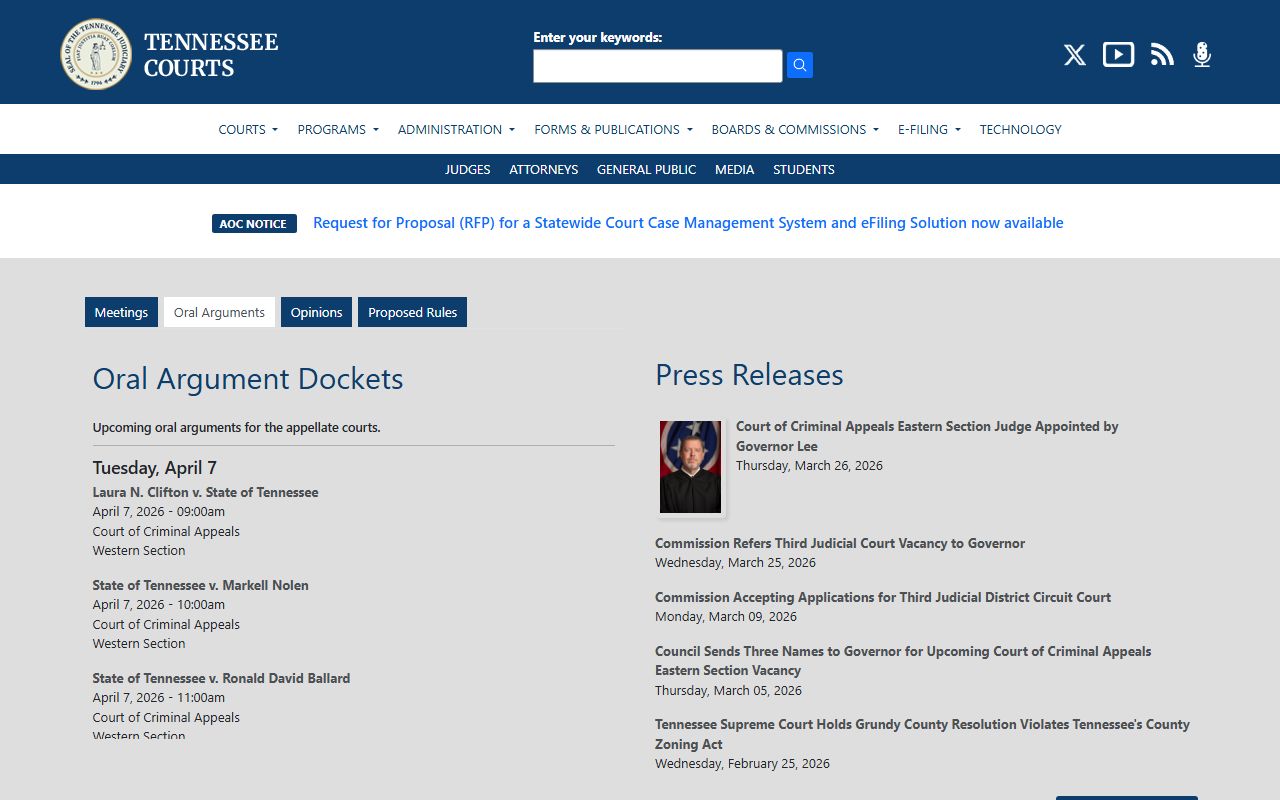
This image gives Lauderdale County searchers a broad statewide entry point before they return to Ripley for the local file.
Historical Lauderdale County Records
Older Lauderdale County criminal records may be in archive form instead of the live office index. If the file is historic, ask for the year and the office that likely created the record first. That can keep the search from getting too wide. If the clerk cannot find it right away, the archive guide can help you decide whether to widen the range or change the record type. A narrow request is especially helpful when you are looking for a court file tied to an older Ripley case.
Note: Historic records are faster to locate when the request starts with a realistic year range.