
Search Tennessee Criminal Records
Tennessee criminal records can come from more than one office, so a good search starts with the right source. Some people need a statewide name search through the Tennessee Bureau of Investigation. Others need a county court file from a circuit clerk, a criminal court clerk, or a general sessions office. Tennessee also keeps appellate case history online and older court material at the State Library and Archives. This page pulls those paths together so you can search Tennessee criminal records, find the right office, and decide when to use a county page instead of a statewide tool.
Tennessee Criminal Records Quick Facts
Tennessee Criminal Records Search
The Tennessee State Courts site is the main statewide court entry point for Tennessee criminal records. It helps people search many trial court records by case number, party name, and case type, and it also points users toward the clerk office that keeps the full paper file. That distinction matters. A portal can confirm that a case exists, but the clerk is often the office that can issue the copy, certification, or judgment page that someone actually needs.
Tennessee uses several court levels. Criminal matters can begin in general sessions court, move into criminal court or circuit court, and then continue into appeal. Because of that, Tennessee criminal records are rarely kept in one single statewide file. The best search path is usually narrow and local. Start online when you have little information. Move to the county clerk when you need the actual court record. Use the appellate system only if the case continued after trial.
The Administrative Office of the Courts portal is shown here as the first search step for Tennessee criminal records.
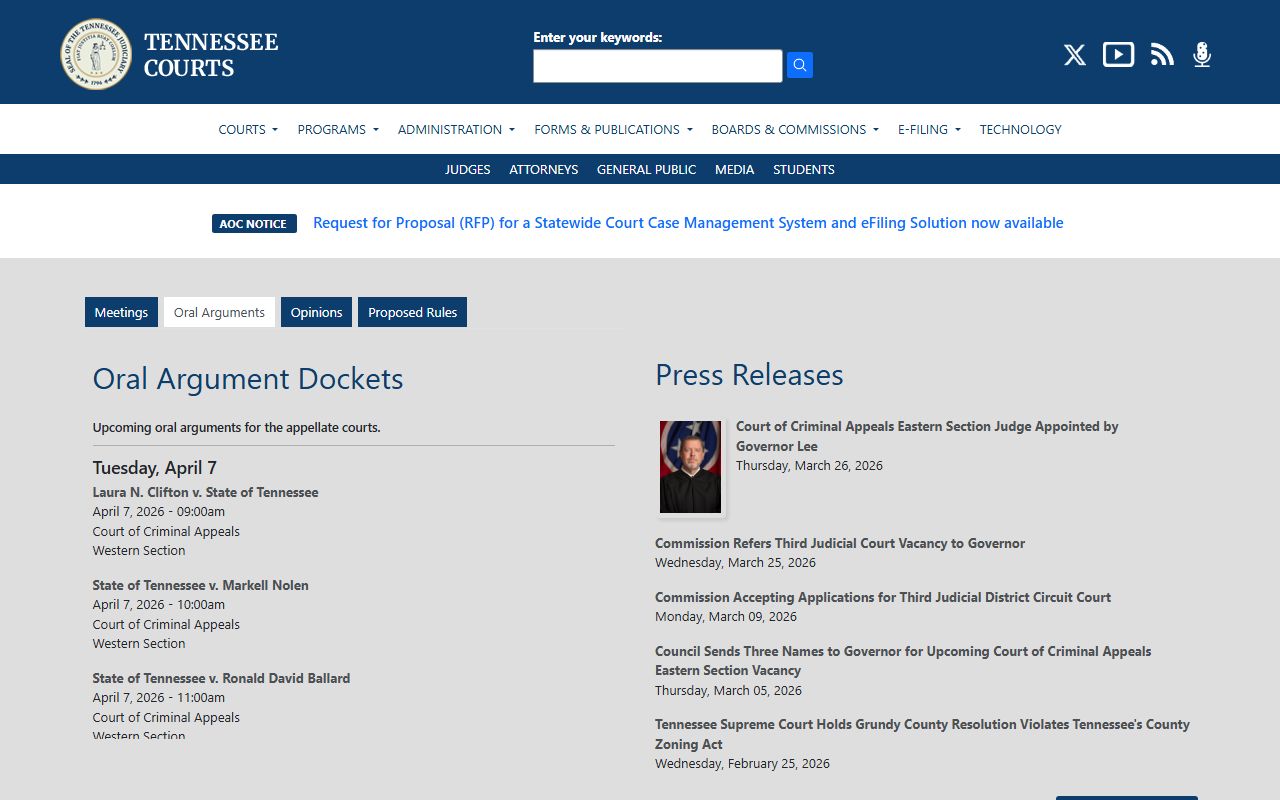
This statewide screen is useful because it gives users a common start before they move to a county clerk, criminal court clerk, or general sessions office.
Tennessee Criminal Records From TBI
The Tennessee Bureau of Investigation keeps the state's central criminal history repository. According to the TBI research in this project, name-based public searches require a complete name, race, sex, and date of birth, while Social Security number and current address can improve the result. Those details are important because Tennessee criminal records are often searched by name first, and common names can produce several possible matches. A narrow set of identifying details reduces that problem.
The fee rule in T.C.A. § 38-6-120 sets the public fee at $29 per name submitted. The background-check procedure statute at T.C.A. § 38-6-109 also explains the role of fingerprint checks when identity needs stronger confirmation. For public users, that means a TBI response is strongest when you supply a full identity set and then compare the result with the county court file if you need the actual case documents.
County Technical Assistance Service adds more context by explaining that Tennessee counties use TBI and FBI checks in some permit and licensing settings. That page is useful here because it reinforces how Tennessee criminal records move between local offices and the state repository, even though the records are not all held in one place.
The CTAS background-check guidance is a useful state source when you need to understand how local offices interact with Tennessee criminal records systems.
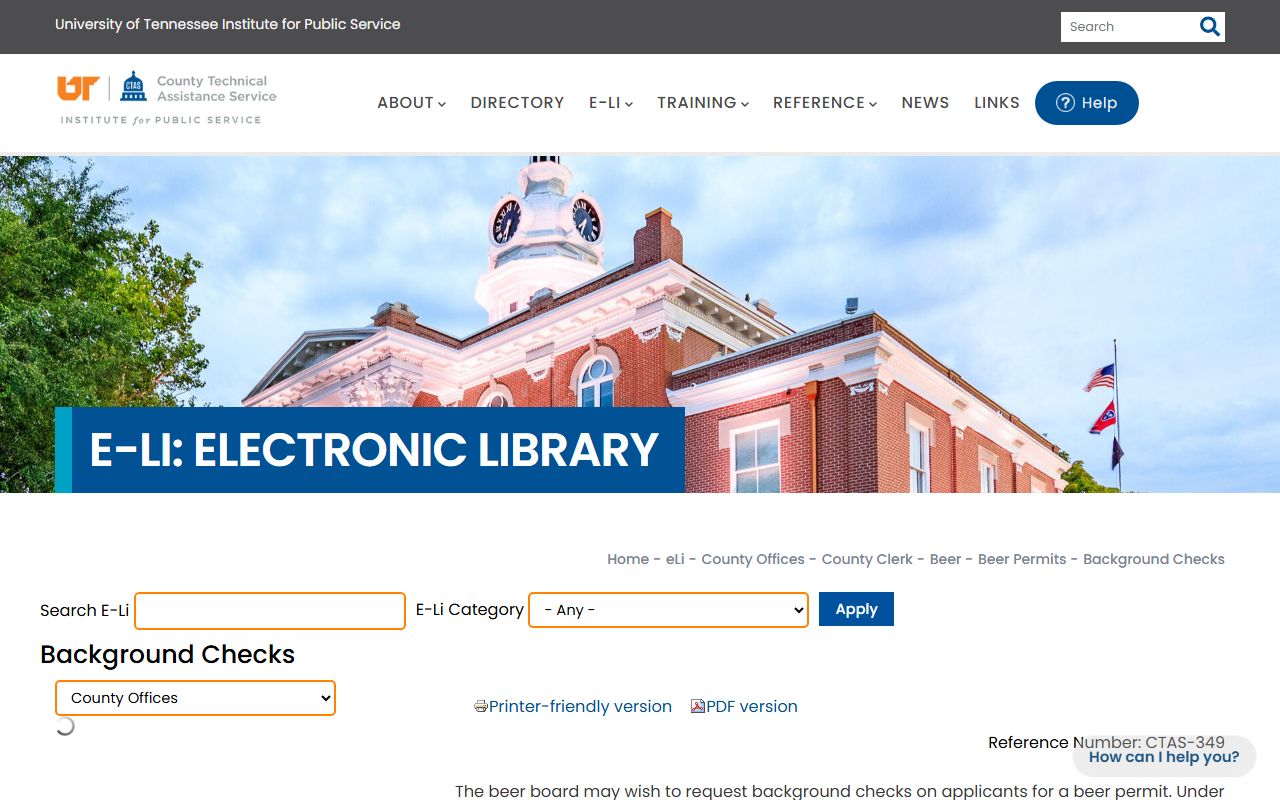
This image helps show that statewide criminal-history access and county-level record handling often overlap, even when the final copy still comes from a local clerk.
Tennessee Criminal Records and Public Access
The main public-access rule for Tennessee criminal records is the Tennessee Open Records Act. Under T.C.A. § 10-7-503, Tennessee citizens may inspect public records during business hours unless a statute makes the record confidential. The same section gives a records custodian seven business days to produce the record, deny the request, or explain the time needed for production. That timing matters when a county office does not hand over a court file on the spot.
The limits are just as important. T.C.A. § 10-7-504 describes the confidentiality side of Tennessee criminal records, including protected investigative files and confidential victim information in some cases. That means not every criminal record is open in full. Court files are often more accessible than investigative material, and older disposed cases are usually easier to obtain than active investigative files.
The public-records statute is one of the main legal anchors for Tennessee criminal records requests.
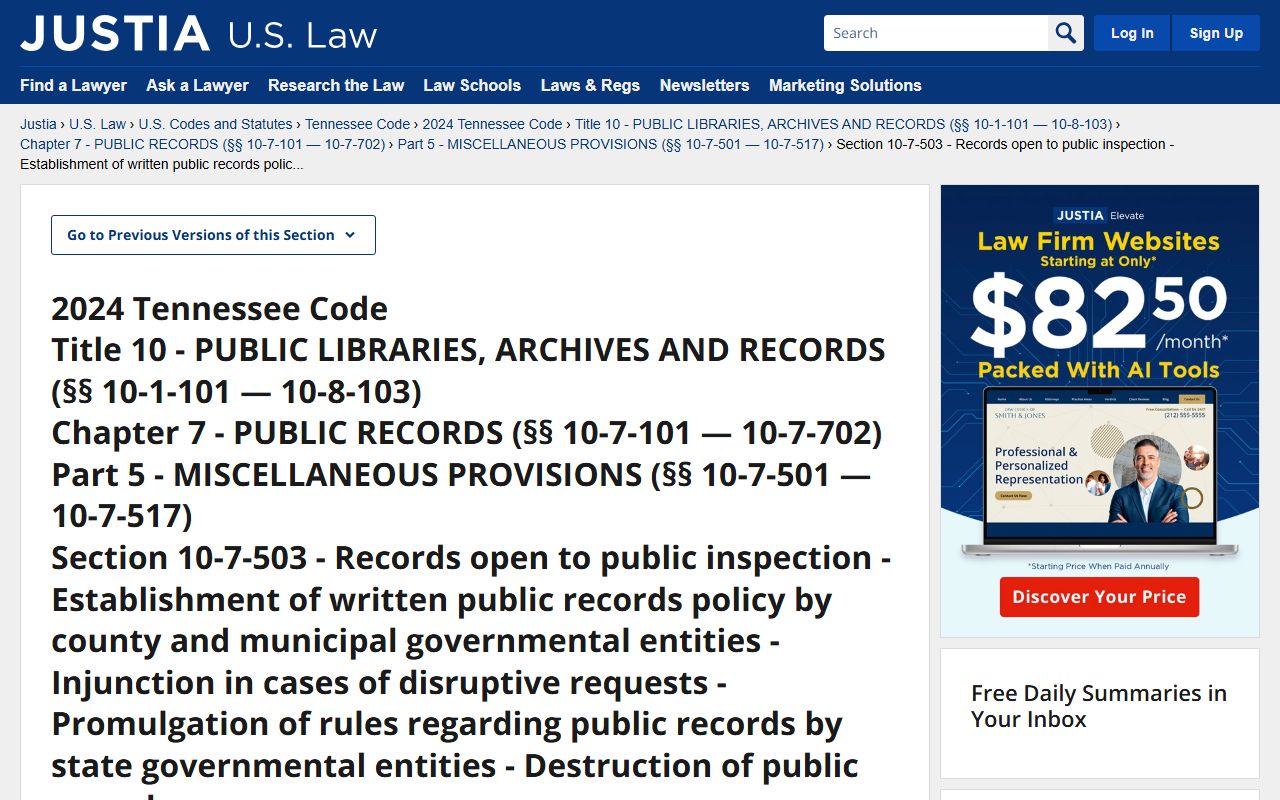
This statute image is a useful reminder that access rules sit beside the court search tools and should shape how you frame any Tennessee criminal records request.
County Tennessee Criminal Records
Most useful Tennessee criminal records still live at the county level. Circuit court clerks, criminal court clerks, general sessions clerks, and sheriff offices keep the local files that describe how a case moved from arrest to disposition. The statewide portal is useful, but county clerks remain the offices that store docket sheets, judgments, plea papers, and certified court copies. If you know the county, going local first is usually faster than starting with a statewide request.
The Tennessee court clerks directory helps users match a Tennessee criminal records search to the right clerk office. That matters because each county may have more than one clerk, and the right office depends on the court level. Some counties also have strong local web portals, while others rely more on phone, mail, and walk-in requests.
The statewide clerk directory is a strong backup when you need the right county contact for Tennessee criminal records.
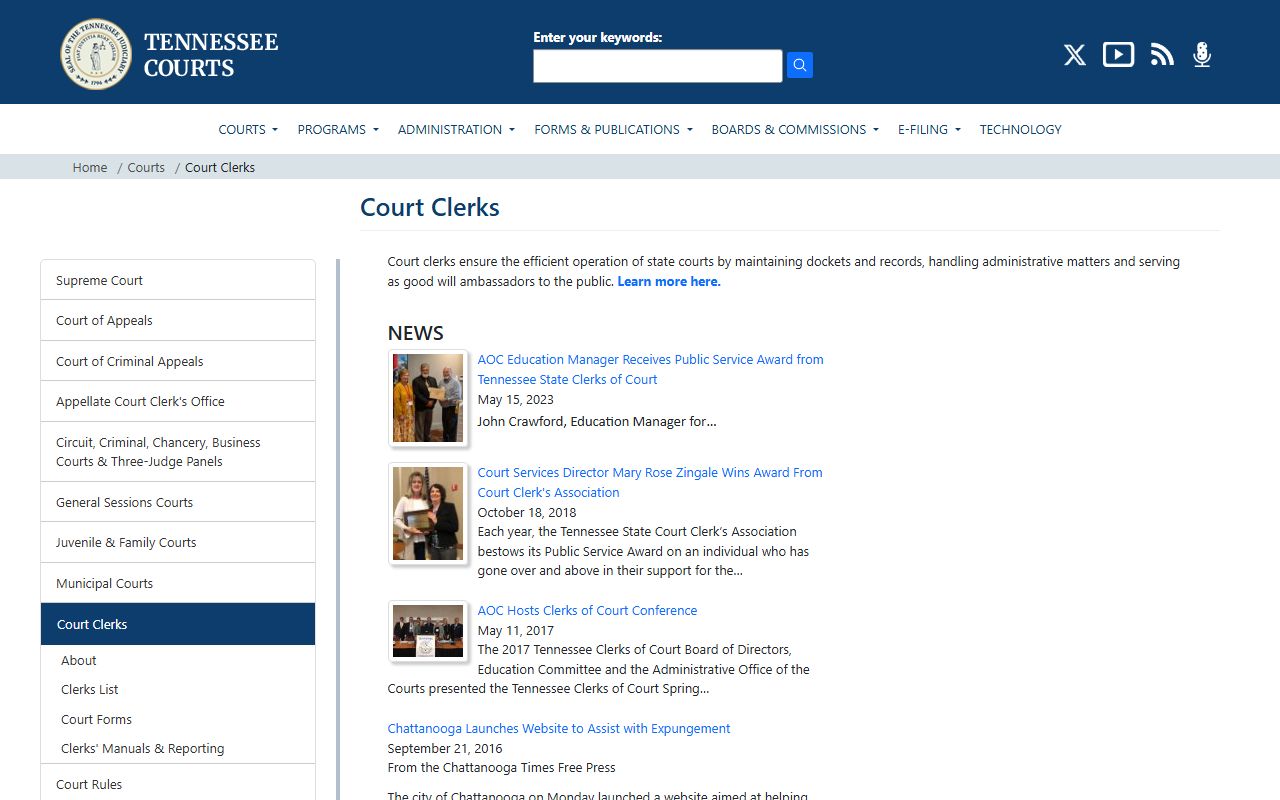
The directory image fits this section because it points users from the statewide system into the county office that actually holds many of the court records.
Historical Tennessee Criminal Records
Some Tennessee criminal records are too old for a county web search or were never indexed online in the first place. When that happens, the Tennessee State Library and Archives becomes the key source. The research for this project notes that TSLA keeps copies of county, circuit, and chancery court minutes, and that staff can search a five-year span for a fee. That is especially useful when a person has a court year but no case number.
TSLA is also helpful because older Tennessee criminal records can be split between county files, microfilm reels, and archive copies. If the county clerk says a file is too old for a simple counter search, the archive can often bridge that gap. The archive hours and retrieval rules matter, so it makes sense to call ahead before a visit and to gather as much case detail as possible before asking staff to search.
The Tennessee State Library and Archives court-records page is shown here because older Tennessee criminal records often move out of the normal county search flow.
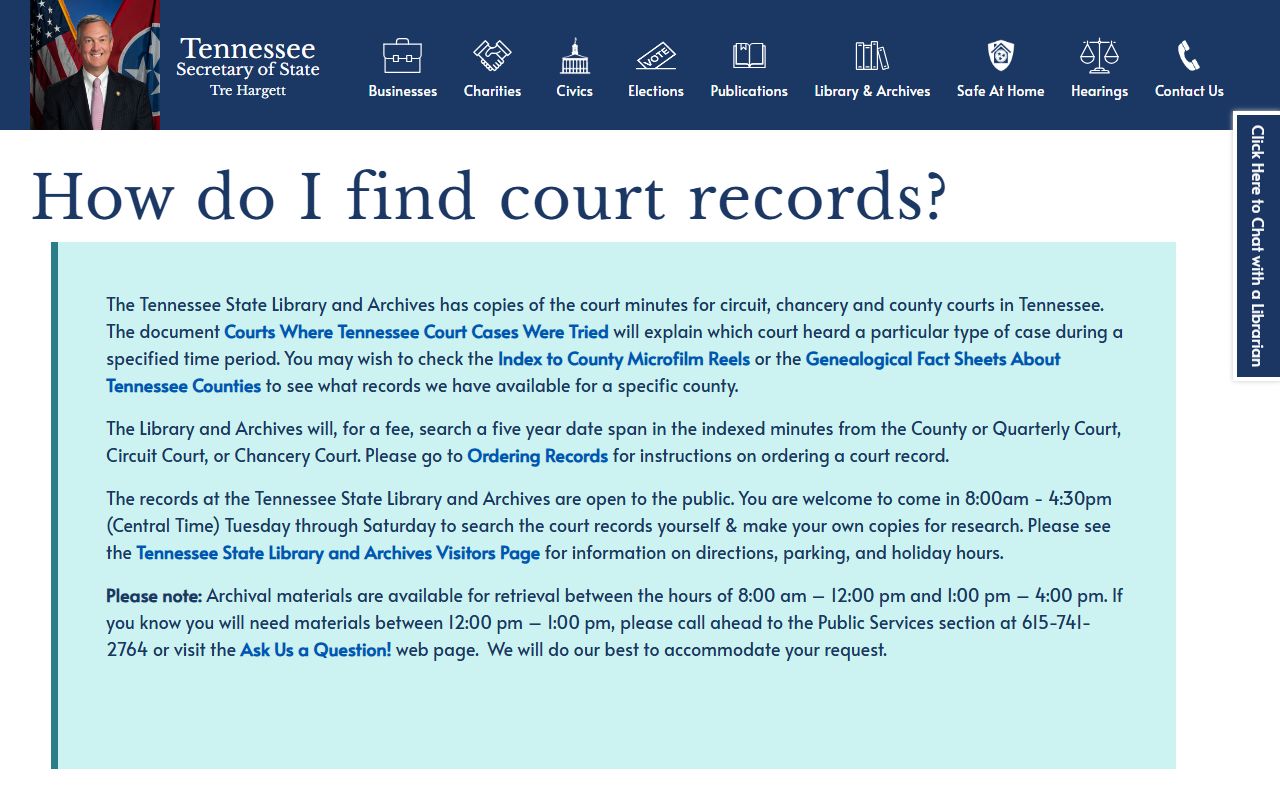
This image fits older-record research because it shows the archive path that people may need after a county clerk search runs out.
Tennessee Criminal Records on Appeal
Not every Tennessee criminal records search ends at the trial court. If the case went up on appeal, the next step is the Public Case History database. The research notes that this system lets users search by appellate case number, case style, party name, or organization name. It can also narrow results to the Supreme Court, Court of Appeals, or Court of Criminal Appeals. For criminal matters, that makes the Court of Criminal Appeals especially important.
The appellate database is different from a county clerk search. It tracks filings, opinions, procedural history, and the progress of an appeal rather than the full trial-level paper file. Even so, it is a strong part of a Tennessee criminal records search because it can confirm whether a case continued after judgment, whether an opinion was issued, and which court handled the review.
The Public Case History system is the right stop for Tennessee criminal records that reached the appellate courts.
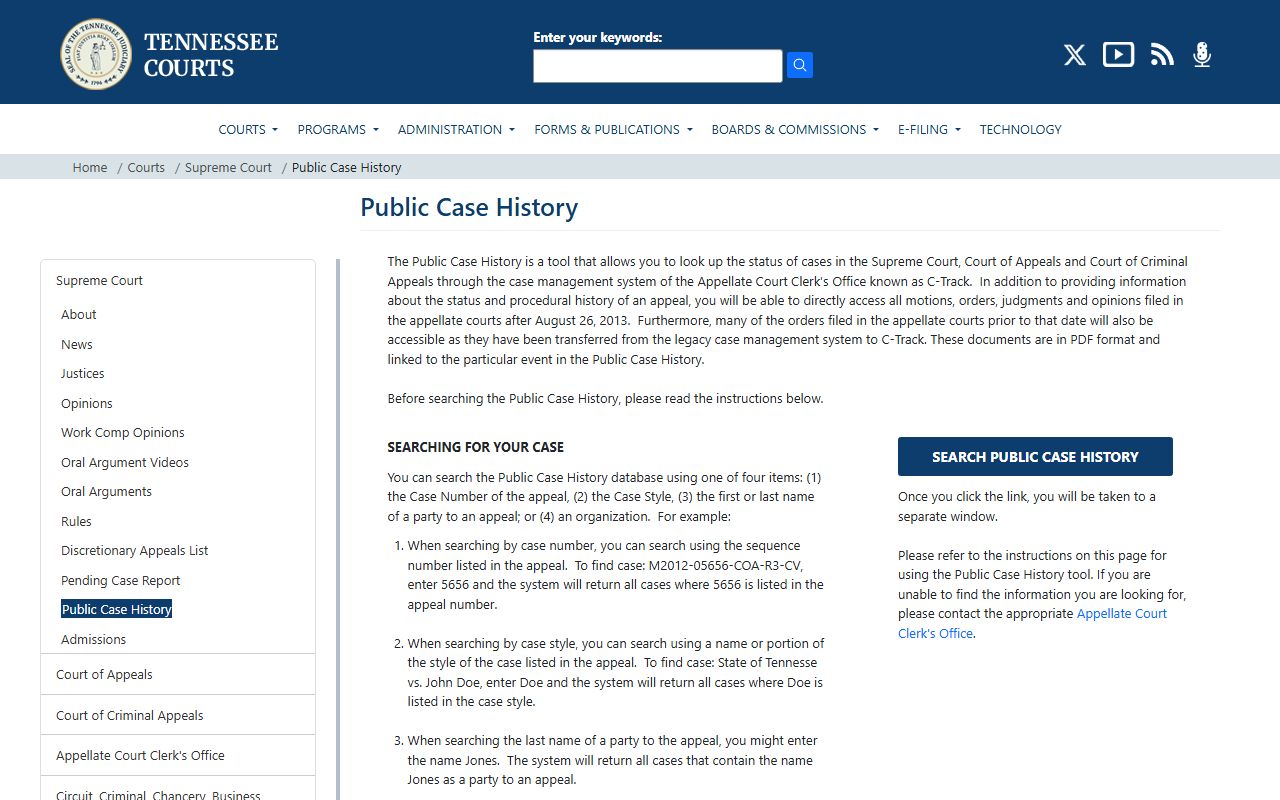
This image shows the part of Tennessee criminal records research that begins only after the county judgment and continues through the appellate system.
How to Prepare for Tennessee Criminal Records Requests
A clean Tennessee criminal records request is short and specific. The ACLU Tennessee open records guide recommends clear descriptions, narrow time frames, and targeted requests to the office most likely to hold the record. That advice matches the county research in this project. Broad requests slow down searches. Narrow requests get better results.
People who search Tennessee criminal records usually move faster when they bring the record details that offices actually use. A case number is best. A full name and year can still work. An arrest date, court type, and county can help a lot when names are common or the matter crossed from city police to county court.
- Case number if you have it
- Full legal name and date of birth
- County and court type
- Approximate filing or arrest date
- Specific record requested, such as judgment or docket sheet
The appellate history page and the trial-courts portal both work better when you bring that level of detail into the search.
Tennessee Criminal Records Search Tools
The search tools below do different jobs. The Tennessee Courts portal helps confirm trial court matters. The TBI criminal-history page explains statewide name searches. TSLA helps with older material. The clerk directory helps when you know the county but not the office. Together, they form the most practical public search map for Tennessee criminal records.
The state courts portal appears again here because it is still the most common first step for Tennessee criminal records searches.
The repeated state-courts image is appropriate here because nearly every county page on this site builds on that same statewide search entry point.
The Public Case History database can help complete the picture when a Tennessee criminal records search needs appellate history instead of trial-level copies.
This second appellate image reinforces that not all Tennessee criminal records stay at the county courthouse once a case moves into appeal.
Browse Tennessee Criminal Records by County
Each county page on this site focuses on the local clerk, sheriff, court structure, and city-record overlap that shapes a county search. Pick a county below to find Tennessee criminal records guidance tied to that courthouse and its local offices.
Tennessee Criminal Records in Major Cities
City pages focus on police records, municipal court records, and the county court connection that usually controls the full criminal case file. Choose a city below for localized Tennessee criminal records guidance.