
Search Grainger County Criminal Records
Grainger County criminal records are centered in Rutledge, where the courthouse and sheriff office sit at the same address on Highway 11W. That makes the local search path simple, but it still helps to know which office owns the record you want. The circuit clerk keeps the court file. The sheriff handles arrest-side information. If you need to match a name to a docket or a report number, the county is easier to work when the request starts narrow. This page keeps Grainger County criminal records tied to the courthouse, the sheriff, and the statewide backup tools.
Grainger County Quick Facts
Grainger County Criminal Records Overview
The Grainger County Circuit Court Clerk is at 270 Highway 11W in Rutledge, with office hours of Monday through Friday from 8:30 AM to 4:30 PM Eastern time. The phone number is (865) 828-3525. The sheriff is also at 270 Highway 11W and can be reached at (865) 828-3613. That setup makes Grainger County criminal records easy to map because the courthouse and sheriff office are close to one another and share the same road address. If you need the court file, the clerk is the right stop. If you need the arrest side, the sheriff is the right stop.
That local structure matters more than it first looks. When records live at nearby desks, a request can move quickly if you bring the case number or the full name and year. The office does not have to guess which building to check. It can go straight to the right shelf or docket. That is the simplest way to search Grainger County criminal records.
The county image comes from graingercountytn.gov.

This image is useful because it points the search back to the county office that manages the local trail in Rutledge.
Where to Find Grainger County Criminal Records
Grainger County criminal records usually start with the courthouse. The clerk can help with case files, dockets, and certified copies. The sheriff can help with arrest-side records and related custody information. Because both offices are close together, a person can often compare notes quickly and move from one office to the other without much delay. That is a real advantage in a county search.
If you are not sure where the record lives, start with the courthouse office and ask whether the case is at the clerk or sheriff stage. Many requests slow down because the first question is too broad. A better question is simpler. Ask for the record type, the office, and the date range. Then let the staff tell you what exists.
The county clerk directory at tncourts.gov/courts/court-clerks can help if you need to confirm the right clerk before you drive to Rutledge.
Note: The closer the request is to a date or case number, the less time the office spends sorting similar names.
How to Search Grainger County Criminal Records
Start with the case number if you have it. If you do not, use the full name and the approximate year. Grainger County criminal records are easier to find when the request is tied to the office that created the record. The sheriff can help if the matter began with an arrest. The clerk can help if the matter is already in court. That order keeps the search from getting out of hand.
If you need a broad cross-check, the Tennessee Courts portal can confirm whether a case appears in the statewide court system. If the case continued into appeal, Public Case History can show the appellate trail. Those tools are useful when the local office needs a tighter request or when the case has moved beyond the county file.
- Bring the full name when possible.
- Add the year or arrest date.
- Note whether you need court or arrest records.
- Use the case number if you already have it.
Grainger County Criminal Records and Local Offices
Grainger County is a good example of why local details matter. The courthouse and sheriff office are on the same road, but they do not hold the same record. The clerk handles the court file. The sheriff handles the arrest side. When you know which office made the record first, the search is much smoother. That is the best approach if you want a complete record trail in Grainger County.
Open-records law still shapes the process. Under T.C.A. § 10-7-503, many government records may be inspected during business hours. The confidentiality side in T.C.A. § 10-7-504 explains what stays closed or partly closed. That means Grainger County criminal records may be open in part even when certain details are withheld.
For a county-wide backup, the Tennessee Bureau of Investigation page at tn.gov/tbi/divisions/cjisdivision/background-checks.html explains the state name-search process.
Tennessee Search Tools for Grainger County
The statewide tools are useful when the Rutledge search needs a second layer. The TBI fee rule in T.C.A. § 38-6-120 gives the public price for a name-based criminal-history search. The Tennessee State Library and Archives can help through its court-records guide when the file is old or the court minute book is the better source. Both tools can save time before you call the county office again.
When the case reached appeal, the Public Case History database at tncourts.gov/courts/supreme-court/public-case-history can tell you what happened after the trial court stage. That is helpful if you need to know whether the county file ended with judgment or moved to a higher court. The statewide portal and archives do not replace the local clerk, but they do help you ask a better question.
Lead-in: The statewide courts image comes from tncourts.gov.
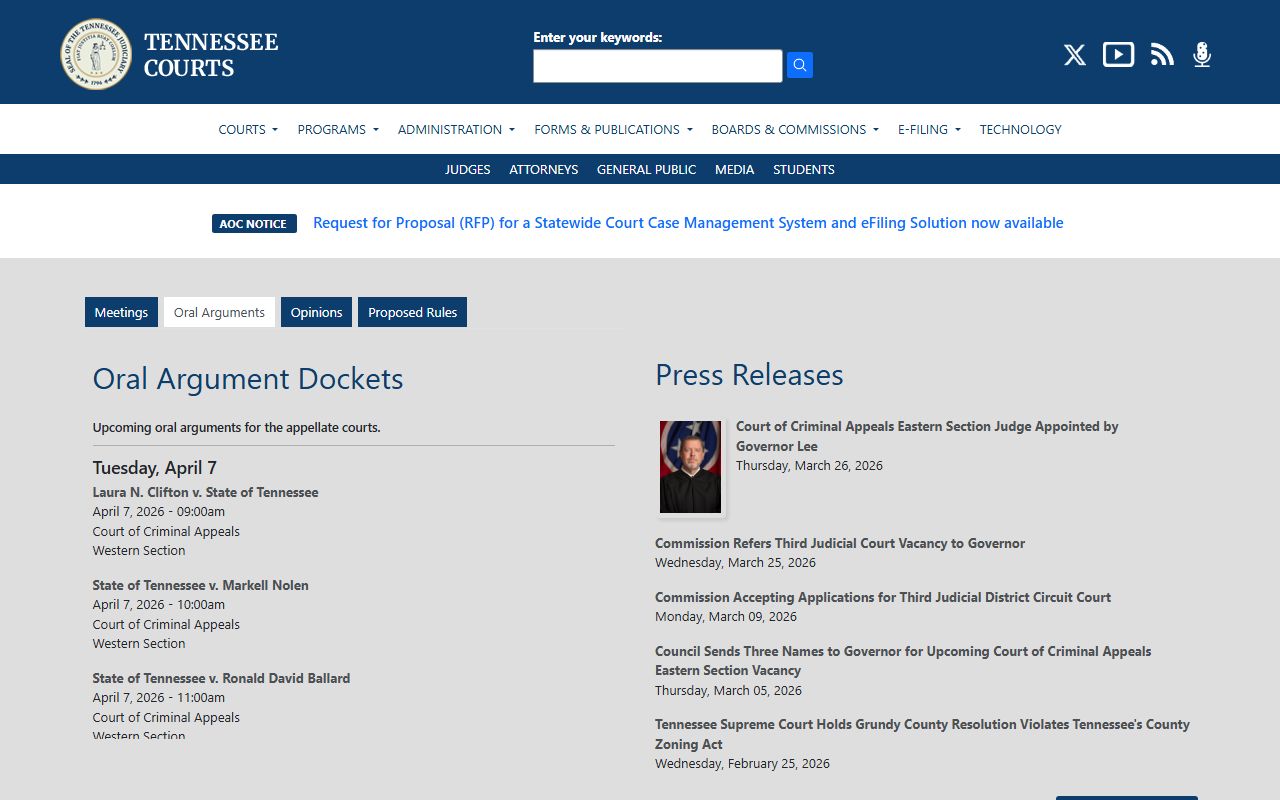
This state image gives the county search a broad backup point when the local office needs a portal check first.
Historical Grainger County Records
If a Grainger County criminal record is old, the clerk may need more than a name. A year, a charge type, or an older case style can make the difference. If the office cannot find the record right away, TSLA can be the next step. Old county and circuit materials can sit in archive copies rather than in the live office index. That is normal in Tennessee and it does not mean the record is lost.
Historical searches work best when you keep the request narrow. Ask for the record type you need, then expand only if the first search does not turn up the file. Note: Older records are often easier to find when the county and state searches are used together instead of one after the other with a broad request.