
DeKalb County Criminal Records
DeKalb County criminal records are handled in Smithville, where the courthouse and sheriff’s office sit close enough to keep the search path straightforward. The county research is brief, so the smartest approach is to use the local clerk first and then lean on the Tennessee courts tools if you need a broader match. A good search starts with a case number, but a name and year can still lead you to the right file. That keeps the record search focused and avoids spending time on the wrong office or the wrong case type.
DeKalb County Quick Facts
DeKalb County Criminal Records
The DeKalb County Circuit Court Clerk is at the DeKalb County Courthouse, 1 Public Square, Smithville, TN 37166. The office hours in the research are Monday through Friday, 8:00 AM to 4:00 PM Central time, and the phone number is (615) 597-5176. The sheriff’s office is at 100 King Street in Smithville. Those two offices are the core of a DeKalb County search, because they give you the court side and the arrest side of the record.
DeKalb County does not have a county image in the manifest, so the safest local path is to use the statewide Tennessee tools and the county courthouse details together. The state courts portal at tncourts.gov can confirm whether a case is in the system before you contact Smithville, and the county clerk directory at tncourts.gov/courts/court-clerks helps you match the right office. That gives the county search a cleaner start.
The state courts image comes from tncourts.gov.
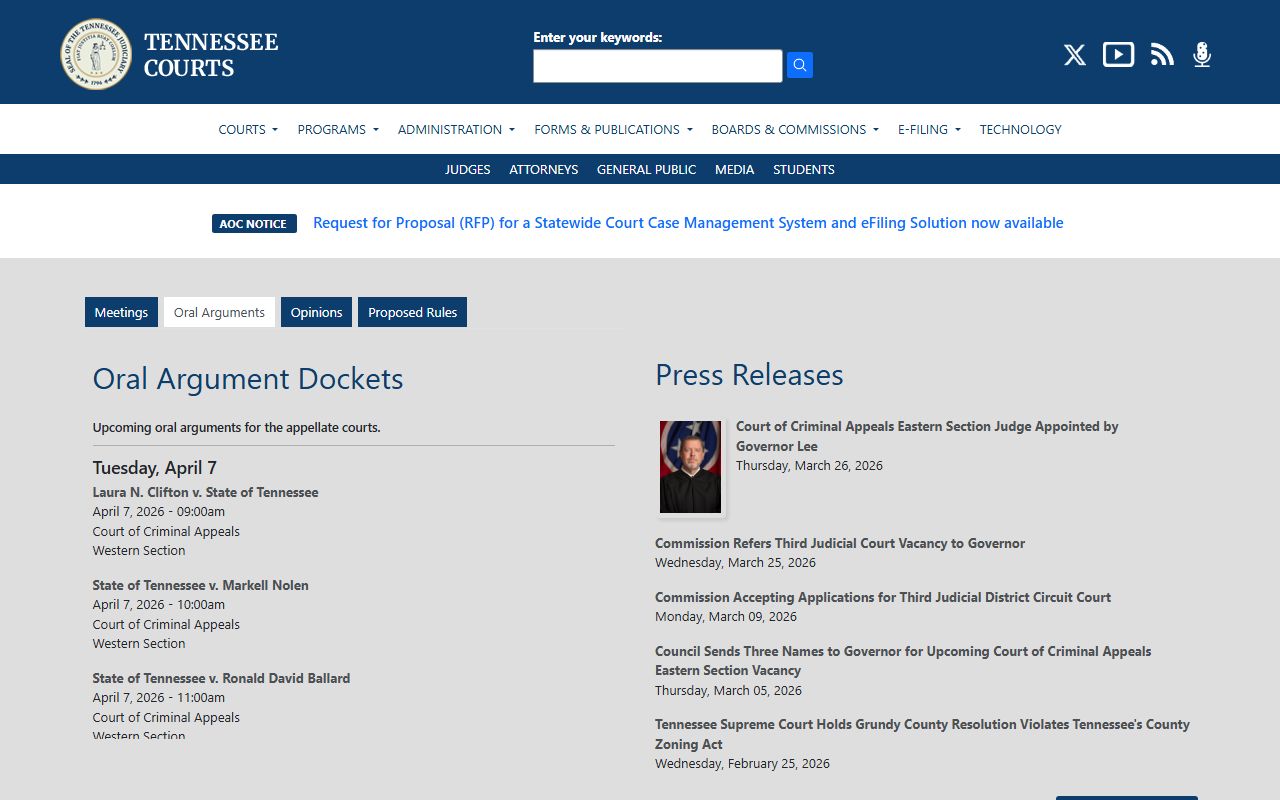
This image works for DeKalb County because the local research is short and the statewide portal is the first strong backup for a county record search.
In DeKalb County, the courthouse, the sheriff, and the state courts portal work best as a sequence. That sequence keeps the search local without missing the wider Tennessee record path if the case is older or harder to trace.
How to Search DeKalb County Criminal Records
DeKalb County criminal records search work is easier when you keep it narrow. Start with the case number if you know it. If not, use the person’s full name, the year, and the court type. The clerk can use that mix to separate one matter from another, and the sheriff can help identify the arrest side if you need that first. The county research is sparse, so a focused request will usually beat a broad one.
If the local office cannot finish the search, the Tennessee Bureau of Investigation page at tn.gov/tbi/divisions/cjisdivision/background-checks.html is a useful statewide cross-check. The TBI fee rule at T.C.A. § 38-6-120 explains the public name-search cost, and that can help you decide whether to check the state record before making a county copy request.
- Use the case number first if you have it.
- Search by full name and approximate year if needed.
- Confirm whether you need court, arrest, or docket detail.
- Ask the clerk which office holds the specific file.
Where to Find DeKalb County Records
Smithville keeps the county search compact. The clerk office holds the formal court record, while the sheriff office can help with booking, jail, and arrest side questions. That means you can often solve a DeKalb County criminal records request with one call if you know whether the file is court or arrest related. If you do not know, start with the clerk and let the office point you to the right desk.
| Circuit Court Clerk | DeKalb County Courthouse 1 Public Square Smithville, TN 37166 Phone: (615) 597-5176 |
|---|---|
| Sheriff | 100 King Street Smithville, TN 37166 Phone: (615) 597-4935 |
| Hours | Monday through Friday, 8:00 AM to 4:00 PM Central time |
That basic office map is enough for most first-time requests. A name, date, and record type will get the search moving without needing a long back and forth.
DeKalb County Criminal Records and State Tools
When the county search needs more support, the Tennessee courts site becomes the next logical step. Public Case History at tncourts.gov/courts/supreme-court/public-case-history is useful if the case reached appeal, while the clerk directory helps you confirm which office should answer the record request. That matters in DeKalb County because the local research does not give many alternate routes.
The clerk directory image comes from tncourts.gov/courts/court-clerks.
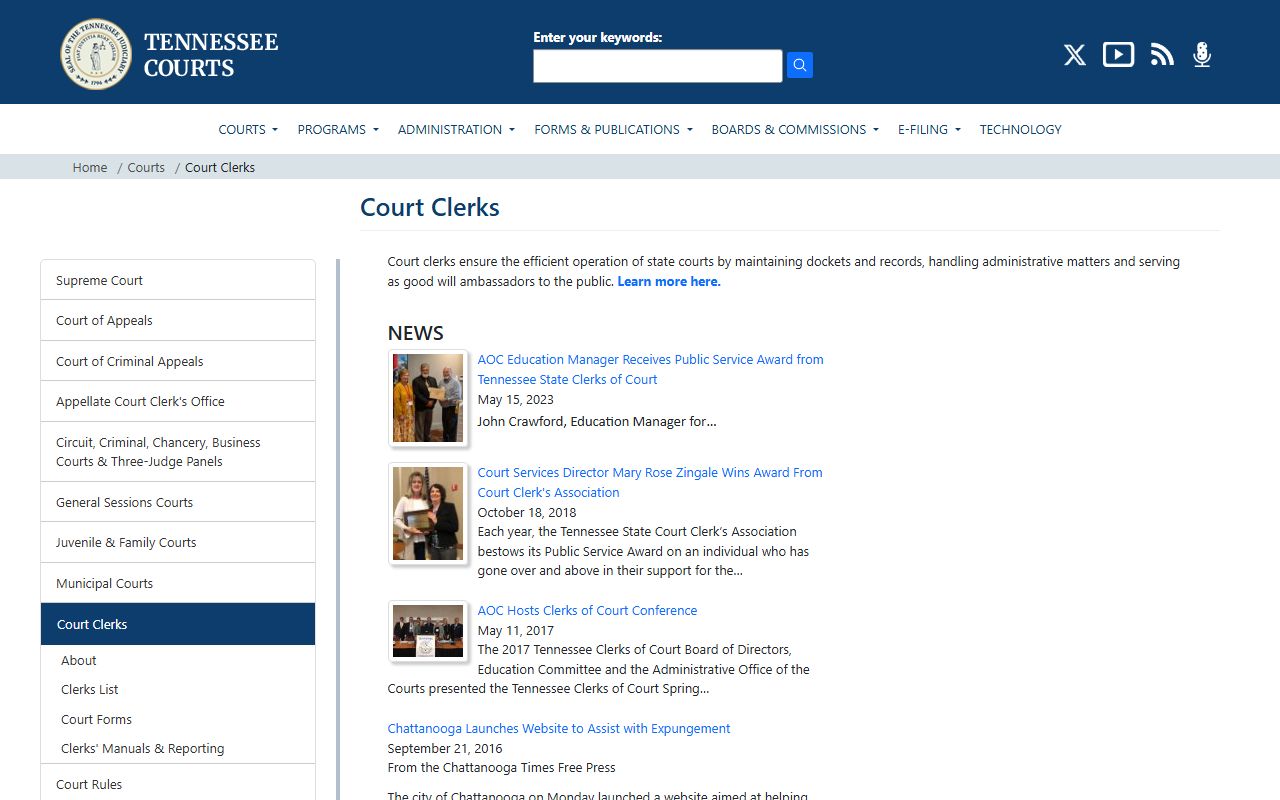
This image gives DeKalb County a clean statewide office map, which is useful when you are trying to identify the right clerk after the first search.
If the case is old, the Tennessee State Library and Archives page at sos.tn.gov/tsla/faqs/how-do-i-find-court-records can help you trace archived court minutes. That is often the best second step when the county office needs more time or the case predates current indexing.
Public Access in DeKalb County Criminal Records
Most DeKalb County criminal records are open under Tennessee’s public records law. T.C.A. § 10-7-503 gives the public the basic right to inspect records during business hours, and the custodian has a short window to respond. That makes the law helpful, but it also means the office may need time to locate the file or explain why a copy is delayed.
T.C.A. § 10-7-504 adds the confidentiality side. Some investigative material is not open, and some records can be redacted before release. That is normal in criminal records work. It usually means the public part of the file is still available even if one piece is not.
Note: DeKalb County searches move faster when you give the clerk the name, the year, and the case type in one request.
Historical DeKalb County Criminal Records
Older DeKalb County criminal records may be harder to find at the counter, but they are not necessarily lost. If the file is old enough, the county clerk may point you to archived minutes or to the Tennessee State Library and Archives. That is especially helpful for older cases that no longer show up cleanly in a modern search.
The archives image comes from sos.tn.gov/tsla/faqs/how-do-i-find-court-records.
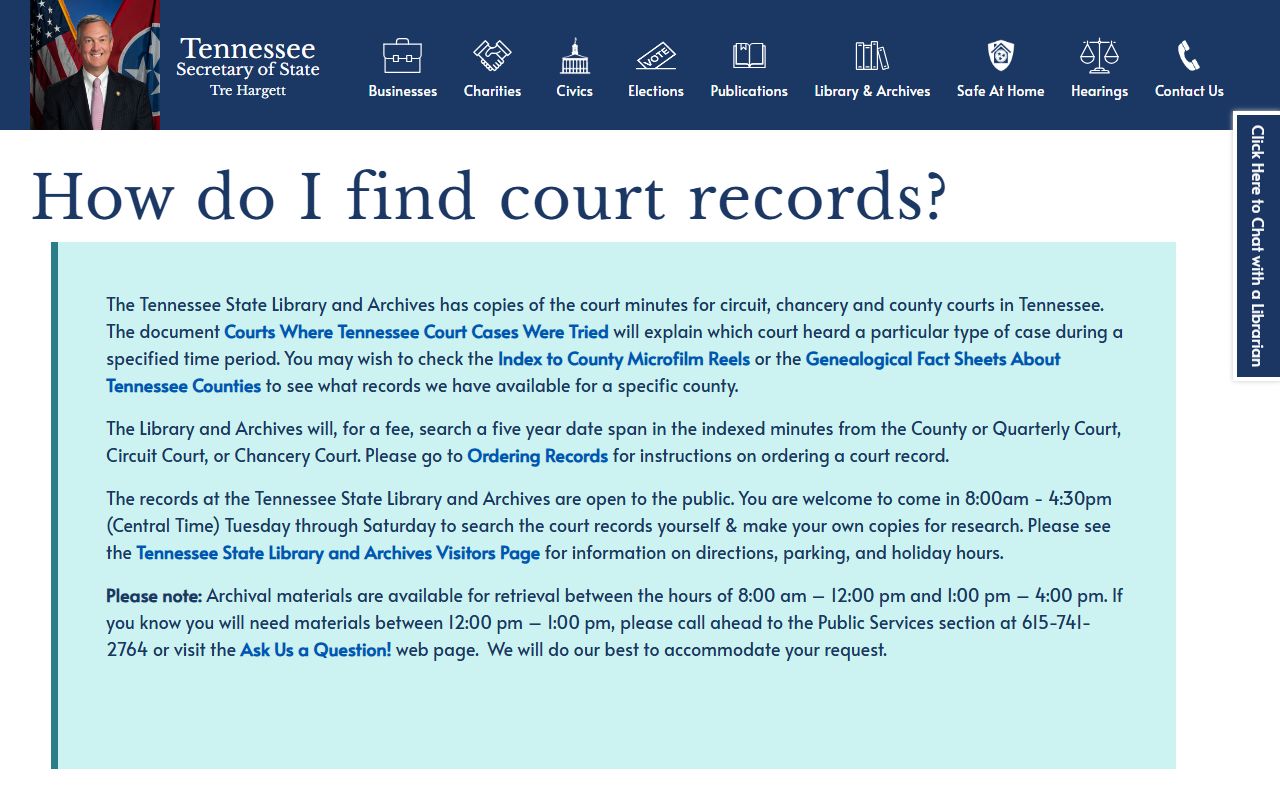
This image fits the historical search because older DeKalb County criminal records are more likely to surface through archives than through a quick office counter lookup.
Once you have the old year, the court type, and the name, the archives route is much easier to use. It is slower than a local search, but it can fill the gap when the county file is too old for the normal index.